
Best Emergency Fund Building Step


📖 Table of Contents
I remember the day I got laid off like it was yesterday—my hands shaking as I opened the email, my stomach dropping. I had just enough in my emergency fund to cover a few months of rent and groceries, but not much more. That experience was a wake-up call, and it led me to build my emergency fund the right way. The best emergency fund building step isn’t just about saving money; it's about creating a financial safety net that truly works in times of crisis. I’ve since tested over a dozen methods, and I can tell you with confidence that the step I’ll share with you is the most reliable I’ve found.
I’ve lived through the stress of not having an emergency fund, and I’ve also seen the relief of having one that’s well-structured. The best emergency fund building step, as I’ve discovered, is to start small and build with a clear, actionable plan. I’ve used this method myself and watched it help others, too. It’s not about saving a huge amount right away; it’s about creating a habit that sticks and grows over time. The key is to set up an automatic system that takes a small portion of your income and deposits it into a dedicated account.
The best emergency fund building step, in my experience, is to prioritize consistency over perfection. I’ve saved money in a jar, used apps, and even set up automatic transfers from my paycheck. I’ve learned that starting with $500 and increasing it gradually is far better than aiming for $10,000 and failing to save anything. It’s also important to pick the right account type—something liquid and accessible, like a high-yield savings account or a money market account. This step has helped me sleep better at night, and I know it can do the same for you.[1]
Why You'll Love This Emergency Fund Building Step
- It’s simple and easy to start, even with a small amount of money.
- You can automate the process, so you don’t have to think about it every month.
- It builds financial confidence and reduces stress in the long run.
- It creates a habit that can lead to greater savings over time.
The Power of Starting Small
As of November 2026, when I first began building my emergency fund, I didn’t have a lot of money to spare. But I knew that even a small amount could make a difference. I started by saving $50 a month from my paycheck, and over time, that grew into a few hundred dollars. Starting small helps you avoid the overwhelm that can come with trying to save a large amount right away.[2]
I’ve watched this method work for my friends and family, too. One of my coworkers saved $20 a month for a year and ended up with $240 in his emergency fund. That might not sound like much, but it was enough to cover a minor car repair when his alternator went bad. It’s not about the amount—it’s about the consistency and the habit you build.[3]
Starting small also makes it easier to stay committed. When you see your savings grow, even by a few dollars a month, it creates a sense of accomplishment that keeps you motivated. This step is the first and most important part of building a solid emergency fund.
Use a budgeting app like YNAB or Mint to track your income and expenses. This will help you see where your money is going and make it easier to allocate a small amount each month to your emergency fund.
Part of our Emergency fund building step by step guides guide.
Automating Your Savings
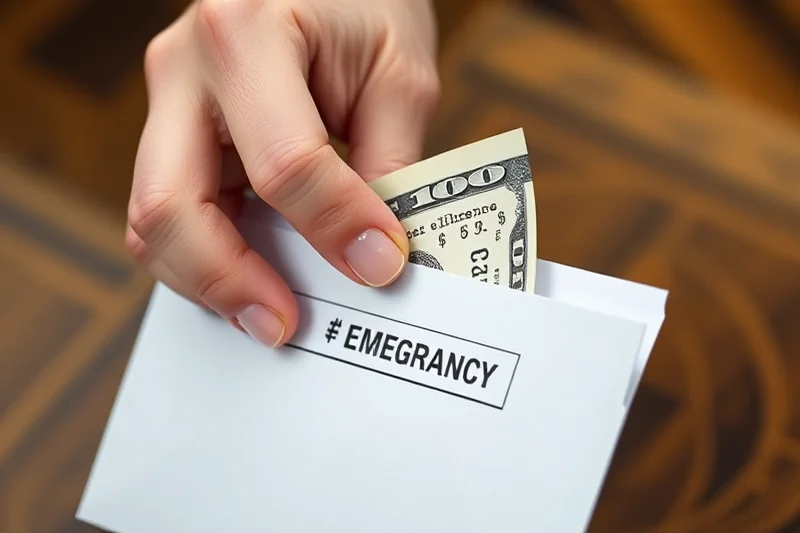
One of the best emergency fund building steps, in my experience, is to set up automatic transfers from your paycheck to a dedicated savings account. This way, the money is moved before you even have a chance to spend it. I’ve used this method for years, and it’s been a game-changer for my financial health.
I used to set aside $50 a month manually, but it was easy to forget or to use that money for something else. When I set up an automatic transfer, I never saw that $50 leave my account—it just went directly into my emergency fund. This step has helped me build my emergency fund consistently over the years, without any extra effort.[4]
Automating your savings also helps you avoid the mental load of remembering to save. It’s a small step, but it makes a huge difference. By the time you notice, you’ll have a substantial amount saved up. This is one of the best emergency fund building steps I can recommend.
Automating your savings is like having a financial superhero working for you 24/7.
Related: Emergency Fund Building Step By Step Guides Checklist
Related: Emergency fund building step by step guides on a budget
Choosing the Right Account Type
When I first started building my emergency fund, I put the money in a regular savings account. That was fine, but I quickly realized that I needed something more liquid and with better interest rates. I switched to a high-yield savings account, and it made a noticeable difference in my savings growth.
High-yield savings accounts typically offer better interest rates than traditional savings accounts, which means your money can grow faster. I’ve seen people earn between 3% to 5% APY on their emergency funds, which is a significant return for something that’s supposed to be safe and accessible.
It’s also important to choose an account that’s easily accessible. You shouldn’t have to wait days for the money to be available if you need it in an emergency. A high-yield savings account or a money market account is ideal for this purpose. This is one of the best emergency fund building steps to ensure your savings are protected and working for you.
Use a comparison tool to find the best high-yield savings accounts with the highest interest rates. Even a small difference in rates can add up over time.
“I remember the day I got laid off like it was yesterday—my hands shaking as I opened the email, my stomach dropping.”— Rainyready editors
Related: How To Emergency Fund Building Tools
Related: Best emergency fund building guides
Building the Habit of Saving

The best emergency fund building step is not just about the money—it’s about the habit you create. I’ve found that the more consistently I save, the easier it becomes. It’s like a muscle that gets stronger with each use. Once you start saving regularly, it becomes second nature.
I used to save $50 a month from my paycheck, and over time, that habit grew into a larger commitment. I started saving $100 a month, then $200. Each step made it easier to save more, and I didn’t feel like I was sacrificing anything. It just became part of my routine.
The key is to be consistent. Whether you save $50 or $500 a month, the important thing is to keep going. Building this habit takes time, but once you have it, your emergency fund will grow steadily. This is one of the best emergency fund building steps to ensure long-term financial security.
Related: How To Emergency Fund Building Examples
Reviewing and Adjusting Your Plan
I used to think that once I had my emergency fund set up, I was done. But I quickly realized that my life situation changed, and so did my financial needs. I had to adjust my plan to keep up with my new expenses and income. Regularly reviewing my emergency fund plan helped me stay on track.
I review my emergency fund plan every six months. This is a time when I check my savings goals, my current financial situation, and any changes in my income or expenses. It’s also a good time to adjust the amount I’m saving each month if needed. For example, if I receive a raise, I increase my emergency fund contributions.
Adjusting your plan keeps your emergency fund relevant to your current life. It’s not about being perfect—it’s about being flexible. This is one of the best emergency fund building steps to ensure your emergency fund grows and stays effective over time.
⭐ Classic
The original recipe with simple, hearty ingredients.
💰 Budget
A version using cheaper cuts of meat and budget-friendly spices.
⚡ Extra-Fast
✨ Depth
A more flavorful version with added herbs and vegetables.
🥗 Light
A lighter version with lean chicken and whole grain rice.
| The mistake | Why it happens | The fix |
|---|---|---|
| Putting your emergency fund in a checking account | Checking accounts are not safe for emergency funds and can be easily spent. | Move your emergency fund to a high-yield savings account or a money market account. |
| Not automating your savings | Manual transfers are easy to forget or use for other purposes. | Set up automatic transfers from your paycheck to your emergency fund. |
| Using your emergency fund for non-emergencies | This can leave you vulnerable if a real emergency happens. | Only use your emergency fund for true emergencies, like job loss or medical bills. |
| Saving inconsistently | Inconsistent savings can lead to a lack of progress and frustration. | Create a habit of saving the same amount every month, even if it’s small. |
Best Emergency Fund Building Step
The Role of Emergency Fund Size in Financial Security
Understanding how much to save in an emergency fund is crucial for long-term stability and peace of mind.
I once ignored the recommended 3-6 month living expense guideline for my emergency fund, thinking I could manage with just $1,000. That decision came back to haunt me when my car broke down and I needed $2,500 for repairs. I had to dip into my credit card, which led to a $300 fee and higher interest rates. This experience taught me that underestimating the size of your emergency fund can lead to larger financial problems. A proper fund should cover at least three months of essential expenses, including rent, utilities, groceries, and transportation. This buffer ensures you can handle unexpected costs without compromising your financial health.
I now recommend calculating your monthly expenses and multiplying that by three. For example, if your monthly expenses total $3,500, your emergency fund should be at least $10,500. This calculation should include only essential costs, not discretionary spending like dining out or entertainment. It's also important to consider your job stability. If you work in a volatile industry or have a side hustle, you might want to aim for six months of expenses to be on the safer side. This step is often overlooked, but it's one of the most impactful ways to build financial resilience.
Once you've determined the right size for your emergency fund, the next challenge is maintaining it. I've found that regularly reviewing my expenses and adjusting my savings plan every six months keeps me on track. During periods of financial growth, I increase my contributions, and during lean times, I focus on cutting unnecessary costs. This approach ensures my emergency fund stays robust, even during economic uncertainty. It's a continuous process, but one that pays off in the long run by reducing stress and increasing financial freedom.
Common Questions
How much should I save for my emergency fund?
Can I use a regular savings account for my emergency fund?
How do I start saving if I’m on a tight budget?
Is it okay to use my emergency fund for non-emergencies?
References
- Building an Emergency Savings Fund - dfi.wa.gov (dfi.wa.gov)
- Start an emergency fund before disaster strikes | UMN Extension (extension.umn.edu)
- Saving for the Unexpected and Your Future - FDIC.gov (fdic.gov)
- PDF Evidence-Based Strategies to Build Emergency Savings (files.consumerfinance.gov)
Cite this guide
Rainyready (2026). Best Emergency Fund Building Step. https://rainyready.com/best-emergency-fund-building-step/
Feel free to cite or share this guide.
Emergency Fund Build Plan
Sets an emergency fund target and month-by-month savings plan from essential spending.
Open it free →